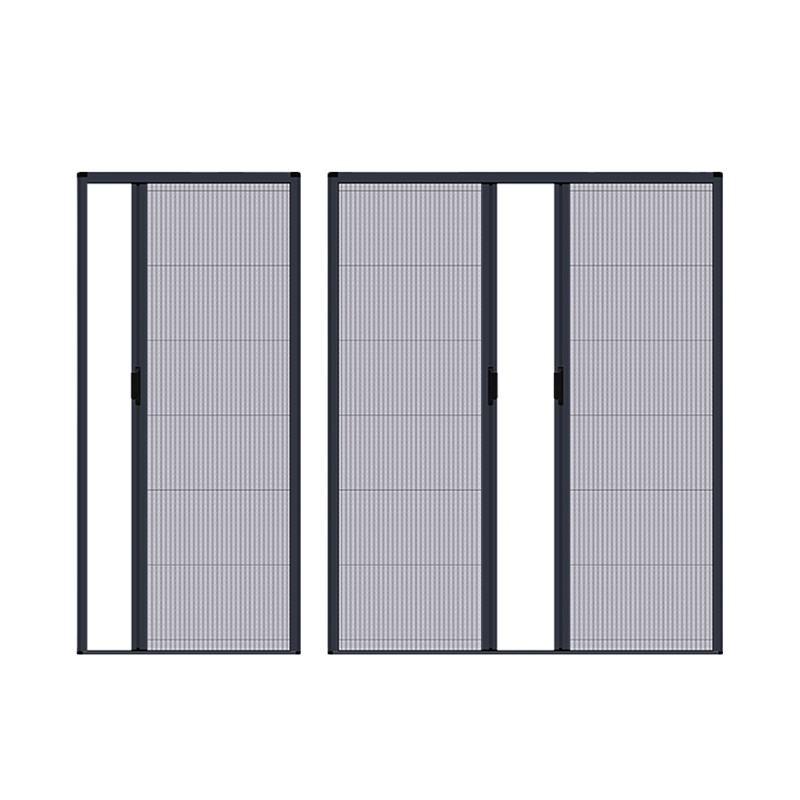
Mosquitoes kill more people than any other animal. Not through venom or teeth, but through the diseases they carry.
Malaria accounts for more than 600,000 deaths a year. Dengue fever causes more than 100 million infections annually. Zika carries birth defect risks. West Nile and chikungunya add to the total. These aren’t rare tropical diseases — they’re present in more than 100 countries, and their range is expanding.
Chemical repellents and insecticides have a role, but they have limits: resistance develops, chemical exposure is a concern for children and pets, and repellents have to be reapplied constantly. A physical barrier has none of those problems. It works continuously, it carries no chemical risk, and it doesn’t lose effectiveness over time.
Why Physical Barriers Work They don’t rely on behaviour. A repellent only works if it’s applied. A screen works whether or not anyone remembered to apply anything.
They don’t develop resistance. Mosquitoes can become resistant to insecticides. They can’t become resistant to a piece of mesh.
They carry no chemical exposure. For households with children, pets or sensitive individuals, a physical barrier is the safer option.
They work continuously. Day and night, whether the window or door is open or closed.
They protect the whole opening. A repellent protects exposed skin. A screen protects the room.
Where Screens Fit in Mosquito Control Public health authorities recommend a combination of measures: eliminating standing water, using repellents, sleeping under nets in high-risk areas, and screening windows and doors.
Screens are the measure that protects the home continuously. They’re particularly important in three situations:
High-risk regions. Where malaria, dengue or Zika are present, screening doors and windows is a first-line defence.
Urban areas with Aedes mosquitoes. Aedes aegypti and Aedes albopictus breed in small water containers and bite during the day. They’re common in cities across the tropics and subtropics, and they’re the vectors for dengue, Zika and chikungunya.
Households with children or pets. Chemical repellents carry exposure concerns for young children and animals. A physical barrier doesn’t.
Why Large Openings Matter Most mosquito control messaging focuses on windows. But in many homes, the largest opening is the patio door, the balcony door or the terrace opening — and that’s where mosquitoes enter in the evening.
A standard window screen doesn’t cover a patio door. A folding screen does. For openings up to six metres wide, a folding screen is the only practical way to apply a physical barrier across the full width.
The Mesh Specification 304 stainless steel mesh. Densely woven, with a mesh aperture small enough to block mosquitoes. It’s non-absorbent, so it doesn’t support mould growth in humid climates, and it’s rust- and corrosion-resistant. It resists clawing, biting and pushing from pets, so it stays intact and keeps working.
Ultra-fine mesh. A finer weave for smaller insects, including some midges and no-see-ums that pass through standard mesh. Better light transmission, but less resistant to sustained pet contact.
For households with pets, stainless steel is the specification that survives.
What a Screen Can and Can’t Do Can: block the vast majority of mosquitoes at the opening, maintain airflow, carry no chemical risk, and work continuously without intervention.
Can’t: eliminate mosquitoes in the wider environment, replace mosquito control programmes, or protect outdoor spaces that aren’t screened.
A screen protects the interior. Outdoor protection requires repellents, drainage and public health measures.
Regional Notes Sub-Saharan Africa, South Asia, Southeast Asia — malaria, dengue, chikungunya. Specify stainless steel mesh on all openings; folding screens on patio and balcony doors.
Latin America, Caribbean — dengue, Zika, chikungunya. Specify stainless steel mesh; folding screens on large openings.
Southern Europe, Mediterranean — West Nile, imported dengue. Specify stainless steel mesh on windows and patio doors.
Southern US — West Nile, dengue in some regions. Specify stainless steel mesh; folding screens on patio and balcony doors.
Australia — Ross River virus, Barmah Forest virus, dengue in northern Queensland. Specify stainless steel mesh; folding screens on large openings.
Get a Free Quote Send us the opening dimensions, photographs, your country and your pets. Tell us whether the area is high-risk for mosquito-borne disease. We’ll recommend the right system and mesh and reply within 24 hours with a detailed quotation.
WhatsApp: FSMBOR — send your size and country Email: reply within 24 hours
Message us your opening dimensions for a free quote.
Folding mosquito screens as physical barriers against mosquito-borne disease — 304 stainless steel mesh, custom sizing for large openings, no chemical exposure, pet-safe, manufactured in Foshan and shipped to over 40 countries.